




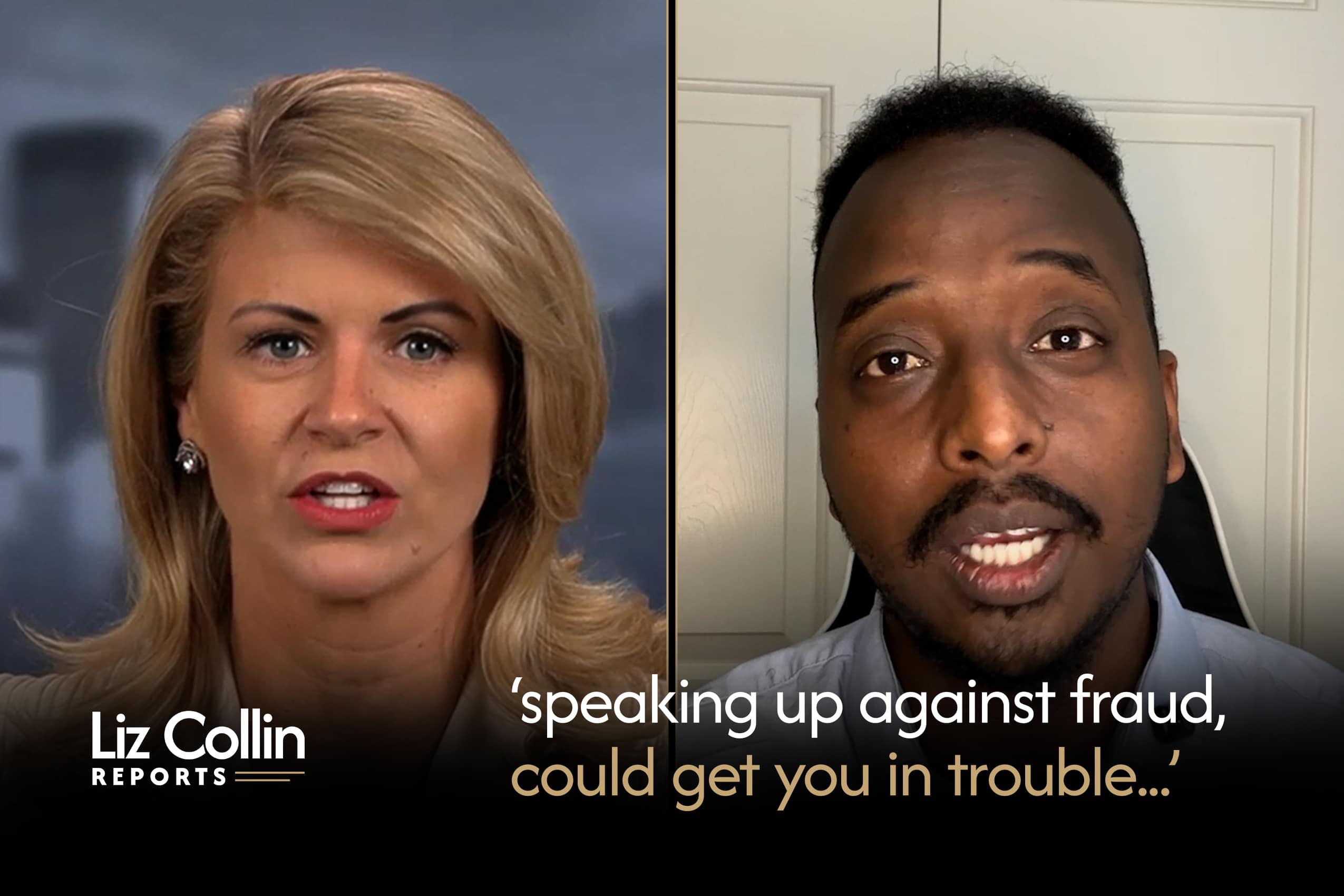
Somali American Abdi Nor Iftin is a naturalized U.S. citizen and the author of a memoir titled “Call Me American.” Iftin has also been outspoken about Somali fraud — and facing threats from the Somali community.
He spoke with Liz Collin on her podcast about the consequences of telling the truth instead of taking sides.
WATCH:
Iftin was very clear in discussing the facts—including that in Minnesota, 90% of those who have been federally charged in fraud related cases are Somali, according to court records.
“I have been speaking about these issues, fraud as well as corruption for a while. I understand now every American is aware of it because the news is talking about it. But I think my community, the Somali community, really needs to be honest and we need to talk about fraud and who’s committing it, even if it’s our own members,” Iftin said.
“What’s bothering me — it’s just the fact that speaking up against fraud within my own community has become something that could get you in trouble, which is ridiculous,” he added.
Iftin also spoke matter-of-factly about how fraud is not helping anyone: “First of all, fraud is fraud. It’s really bad. It hurts everybody. It especially hurts the most vulnerable. So it hurts my community as well, the Somali community.”
In speaking about his book — and how a book event in Minneapolis was canceled — Iftin explained that, “Fraud is bad. Work hard. Right? That’s basically my narrative. And I didn’t shut up there.”
“Members of my community in Minnesota, and specifically those so-called leaders, got angry and upset … they had stormed into the place of my book talk,” which, as Iftin explained, “eventually ended up shutting it down.”
“I went ahead and talked more … I still keep talking about fraud. I’m using my platform to encourage the community to say no to fraud, to say no to the culture that promotes fraud, to say no to any political affiliation that is silent on fraud. And that’s pretty much what I’m doing,” he said.
Iftin also made his gratitude and conviction to America quite clear: “I’m gonna fight to be here, to be American.”
However, the fight and the troubles he has faced along the way haven’t only affected Iftin himself.
“When they couldn’t do anything to me physically, my mother has been threatened in Somalia so she ended up moving from one place to another place. And she has just nothing to do with this. It’s just me, a Somali-American naturalized United States citizen who loves this country,” he said.
Iftin also spoke with Collin from a broader perspective about the need for dialogue.
“Why can’t we talk about that instead of creating a hostile environment and continuing this problem, which does not do any good?”
Collin pointed out how a recent report found that nearly 90% of Somali households with children in Minnesota receive welfare, and 73 % have at least one member of the household on Medicaid.
Much like his memoir, Iftin recalled his past experiences.
“When I first arrived in the United States in August of 2014 … when I went to my community, my Somali community … I was told was to sign up for low-income housing … Section 8, to sign up for all of these benefits,” he said.
Iftin also explained that, “to do that, I have to connect with a local organization. So it’s already a trap — that I see someone is already waiting at the airport. Someone knows that you’re arriving. There are all these NGOs that really want to use you.”
“I do not want to sit in someone’s nonprofit, wait for them to serve me, to help me. I’m not disabled. I have never been. So I want to work,” he added.
In discussing some of the cultural problems Iftin observed, and how NGOs may be doing more harm than good, he also said, “I have seen a lot of my community members in this bubble drinking tea all day long, all these little Somali stores or restaurants getting crowded.”
“It’s a lot of young men in their 20s and 30s. And so I immediately started speaking up, saying, you guys really need to get to work and just do something, go to school, because that’s the American dream. You got to work hard and keep going,” Iftin said.
You learn more about Abdi Noor Iftin on his website or follow him on X @abdi_iftin.

Liz Collin
Liz Collin is a multi-Emmy-Award-winning investigative reporter, news anchor, and producer who cares about Minnesota. She is the producer of The Fall of Minneapolis and Minnesota v We the People documentary films, and author of the Amazon best-selling book, They’re Lying: The Media, the Left, and The Death of George Floyd. Her work has prompted important state laws. Yet perhaps most of all, Liz has been giving a voice to the truth—and helping others tell their stories—for more than 20 years.

Dr. JC Chaix
Dr. JC Chaix is an editor, educator, and an expert in media studies. He wrote and directed the Alpha News documentary "The Fall of Minneapolis" and "Minnesota v We the People."