


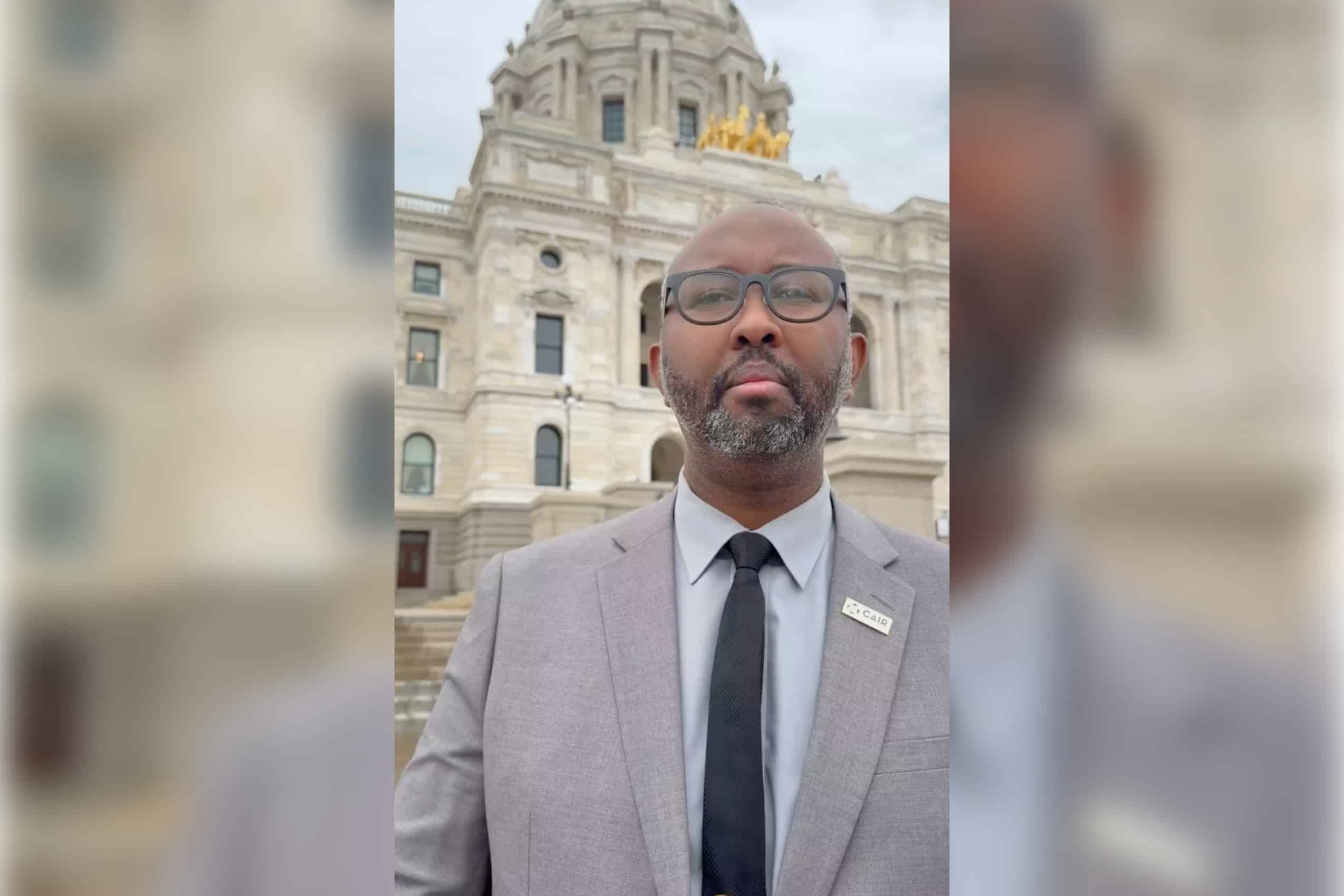
Alpha News has learned the executive director of the state’s Council on American-Islamic Relations (CAIR) was on the receiving end of more than $110,000 in taxpayer payments over six months for a publicly-funded adult foster care program he ran from a Rosemount residence.
What’s more, after Alpha News contacted Jaylani Hussein for comment on April 29, his name and phone number were removed from the license record.
License records changed after inquiry
Hussein, who has led the Minnesota chapter of CAIR since 2015, was — until days ago — listed as a license holder for an adult foster care program alongside co-licensee Fardosa Adan Hassan, according to state records.
A screenshot shows Hussein’s name listed alongside Hassan on the license. The phone number previously listed on the license record matched the number listed for Hussein in multiple CAIR press releases.
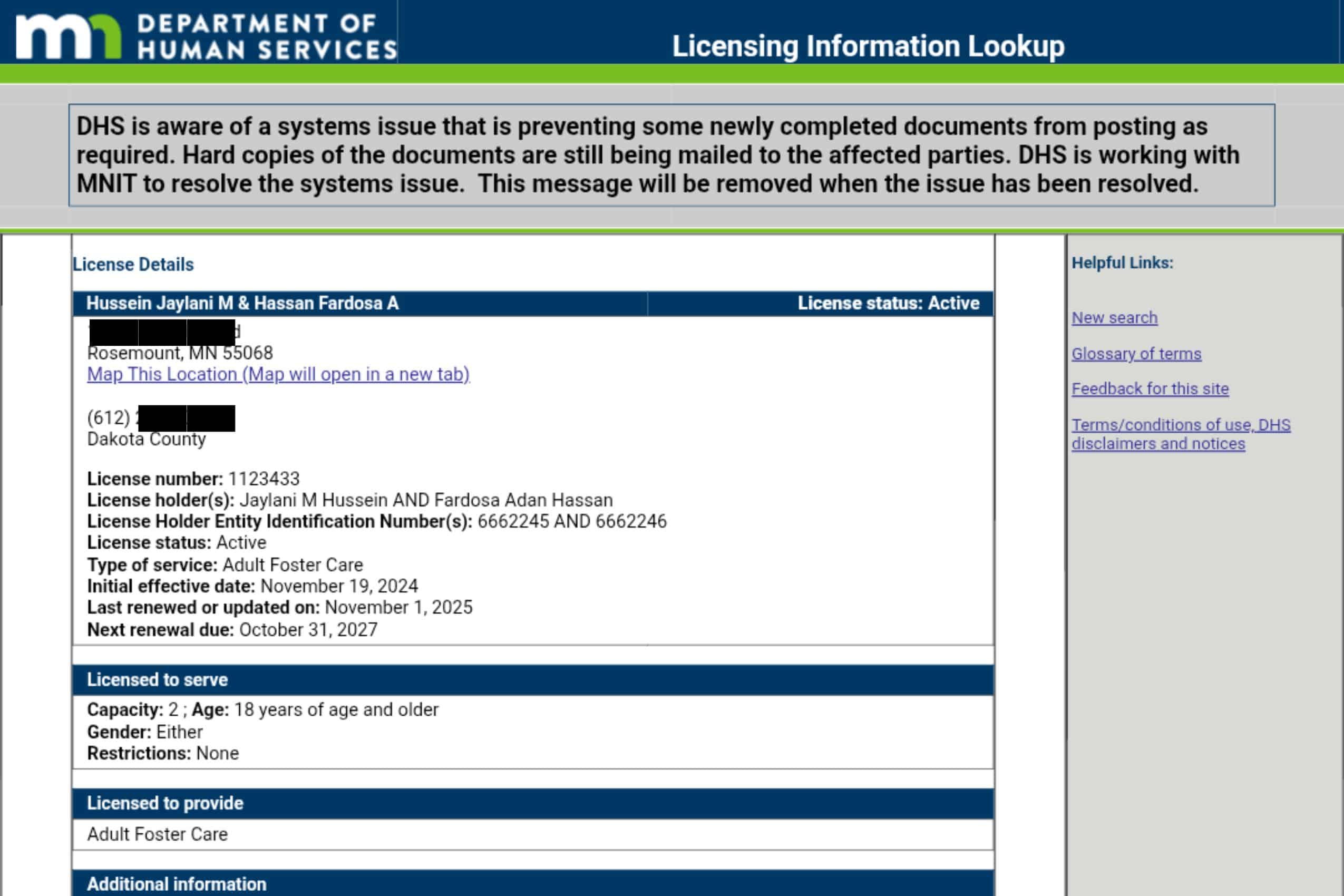
The Minnesota Aging and Disability Resources website continues to list Hussein’s name alongside co-licensee Hassan.
Alpha News obtained payment data from the Minnesota Department of Human Services (DHS) that shows between August 2025 and February 2026, the program in Hussein’s and Hassan’s names received more than $110,000 in taxpayer-funded reimbursements.
According to DHS, adult foster care is a licensed, home-based residential option for adults age 18 and older who need help with daily living. These programs are reimbursed through Medicaid — meaning taxpayer dollars flow directly to providers for housing and care of vulnerable adults.
Alpha News asked Hussein how he balances operating a home foster care program with his role as executive director of CAIR-MN, as well as running Zeila Consultants — a business he created to “develop and offer cross-cultural training workshops on East African cultures,” where his co-licensee, Hassan, also works as a consultant.
Hussein did not respond to inquiries.
No allegations of wrongdoing have been made against Hussein, Hassan or the adult foster care.
Speaking out while inside the system
Hussein — who moved to Minnesota from Somalia in 1993 — has been an outspoken figure in the state’s fraud debate, frequently raising concerns about what he describes as bias against the Somali community.
In the wake of a viral video by Nick Shirley, a Somali-run daycare in Minneapolis held a press conference to report a break-in and vandalism — including missing “important documentation” related to employees and children. The claim quickly drew widespread skepticism online.
Of the reported break-in, Hussein stated: “This disturbing incident raises serious concerns about the real-world consequences of anti-Somali, anti-immigrant and anti-Muslim hate speech circulating online … That raises serious questions about whether bias played a role in the vandalism, and those questions deserve a thorough investigation by law enforcement authorities.”
In an interview with CNN on the Shirley video, Hussein said, “This climate of fear is disrupting livelihoods, separating families, and undermining the sense of safety and belonging for an entire community.”
“Somali Americans sit in an intersection of multiple marginalized identities. We are black, we are immigrants, and we are Muslim. As a result, our community has been scapegoated through sweeping narratives that criminalize our entire community based on identity rather than evidence,” he said during a January hearing.
Conversely, Alpha News found no public instance in which Hussein disclosed his role as a license holder of a taxpayer-funded program that has collected more than $110,000 while publicly commenting on similar programs under scrutiny.
All inquiries to Hussein have gone unanswered.

Jenna Gloeb
Jenna Gloeb is an Edward R. Murrow Award-winning journalist, media producer, public speaker, and screenwriter. Most recently, she worked as a reporter and on-air host for CCX Media. Jenna is a Minnesota native and resides in the Twin Cities with her husband, son, daughter, and two dogs.