


An official with the Minneapolis Emergency Communications Center (MECC) recently told the Minneapolis City Council that 41% of MECC staff were using the newly-created Paid Family and Medical Leave (PFML) program either full time or intermittently.
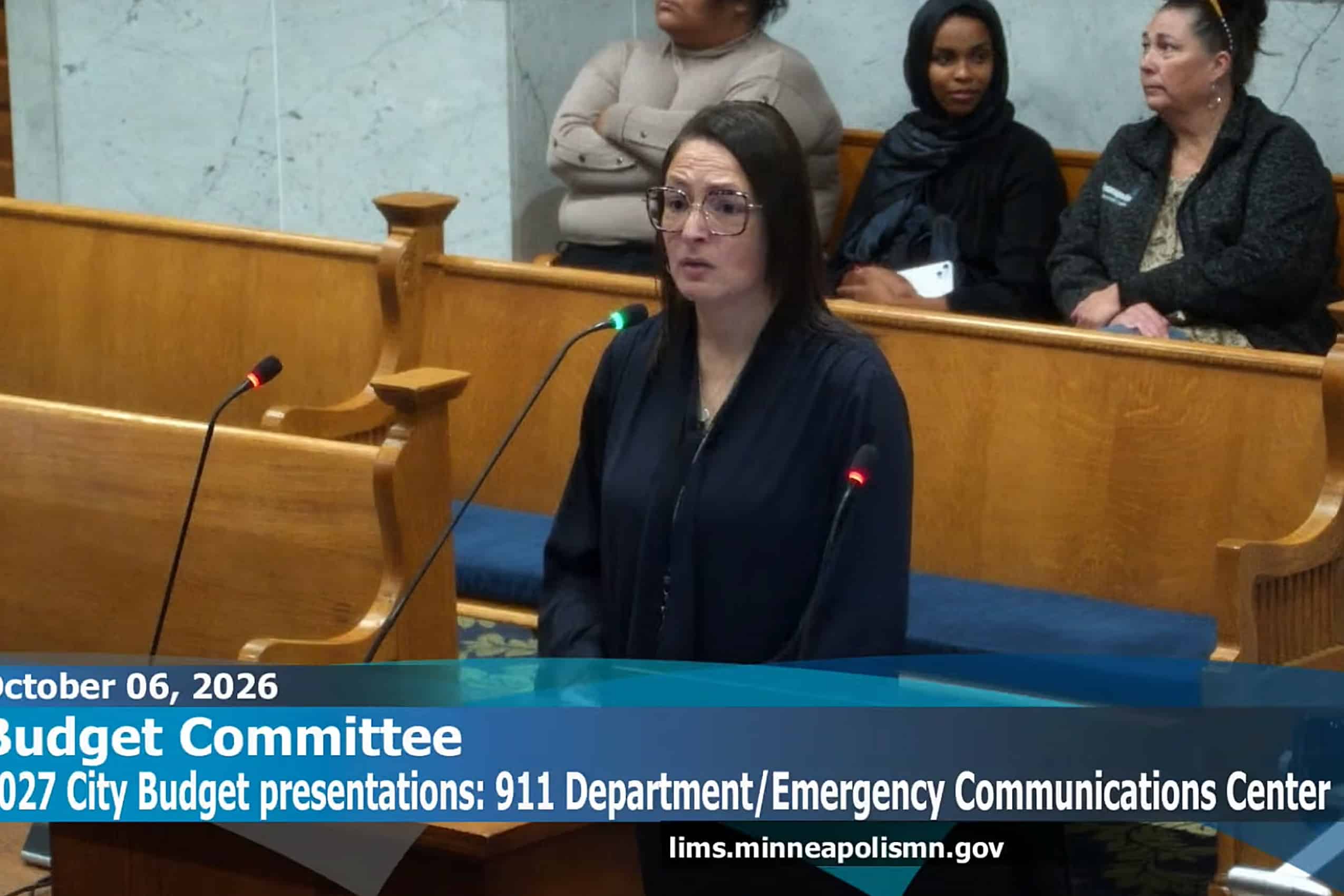
At a budget presentation in October, MECC Assistant Director Leticia Cardenas discussed the department’s needs and proposed budget for 2027. The MECC is the city’s 911 department and takes emergency calls from residents across the city.
The MECC has 92 full-time employees and had a 2026 operating budget of $15.1 million. For 2027, the mayor’s proposed budget for MECC is $16.5 million. The vast majority of MECC’s 92 employees work in the department’s 911 division.
During the budget presentation, Cardenas said most of the department’s expenses come from personnel costs and the department cannot operate below a minimum staffing level to ensure the safety of first responders and the public.
However, Cardenas noted that “over 41% of our staff [are] utilizing some form of PFML coverage either full-time or intermittently, [and] overtime is required to fill the shifts left open when employees are unavailable.”
PFML is a state-level program passed by Democrats in 2023. The program allows nearly all workers in Minnesota, except federal employees, to take taxpayer-funded paid leave if they are dealing with a health challenge, taking care of a loved one, or caring for a newborn.
The program is funded via a payroll tax on employers and employees. Much of the business community was opposed to PFML when it was proposed. PFML began operating in 2026.
Cardenas elaborated on the MECC’s situation, saying, “Implementing and navigating PFML in the 911 has been particularly challenging for us. The high percentage of staff on PFML has had a significant impact on operations.”
“Additionally, because new employees can now use PFML immediately … this has created delays in completing our robust training program in a timely manner and creates a new layer of managing staff,” Cardenas added.
Later in the budget presentation, Minneapolis City Council Member Elizabeth Shaffer asked how the 41% of MECC staff currently on paid leave has affected the department.
Cardenas confirmed the figure was “higher than normal for us,” noting the MECC has always had staff take unpaid leave through the federal Family and Medical Leave Act. However, she said PFML “has created a new challenge for us” and the MECC is learning how to adapt.
Another city council member, Linea Palmisano, asked Cardenas if a person can get hired by the MECC, immediately take paid leave with PFML, and then quit the job once that paid leave has concluded. Cardenas told the city councilor, “Yes.”
WATCH: A Minneapolis official said in October that 41% of staff in the Emergency Communications Center were out on Paid Family and Medical Leave
"Can people immediately take the paid leave when they come on as an employee, and then upon their return from that paid leave, can… pic.twitter.com/1wxBvgOJyg
— Alpha News (@AlphaNews) November 23, 2026
Cardenas clarified that the 41% of MECC employees on paid leave are a mixture of full-time leave and intermittent leave, noting that “a lot of our staff are on intermittent leave,” which means they “are working but then also intermittently off” depending on their situation.
Shaffer expressed a desire for Minneapolis to provide feedback to the state government on how PFML is “affecting us on the ground.” Shaffer said she did not believe the state intended to “penalize” cities and businesses that are implementing PFML.
Alpha News contacted the MECC and the City of Minneapolis with questions for this story. Since the 41% figure was from October, Alpha News asked MECC how many of its employees are currently on paid leave. The MECC did not respond.
However, a city spokesperson did respond to Alpha News but did not answer questions about whether Minneapolis is experiencing a larger than usual number of absent employees or how those absences are affecting city operations.
Instead, the spokesperson said a combined 852 city employees either have taken PFML in 2026 or are currently on PFML. Minneapolis has more than 4,000 full-time employees.
Additionally, the Minneapolis spokesperson forwarded a statement from the city operations officer, Margaret Anderson Kelliher.
“We are proud to support our employees, and we always encourage them to utilize benefits that are available to them,” Kelliher said. “At the same time, we always ensure that Minneapolis services remain uninterrupted, and the City hums along as normal.”
Kelliher added that the number of employees taking leave “is not a surprise to us” and “we planned for this, even before the statewide PFML legislation passed.”
Alpha News also contacted the City of St. Paul with questions about its PFML figures and how paid leave is affecting the city. However, St. Paul did not respond to media inquiries.

Luke Sprinkel
Luke Sprinkel previously worked as a Legislative Assistant at the Minnesota House of Representatives. He grew up as a Missionary Kid (MK) living in England, Thailand, Tanzania, and the Middle East. Luke graduated from Regent University in 2018.