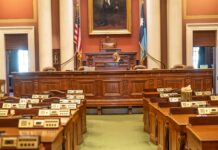
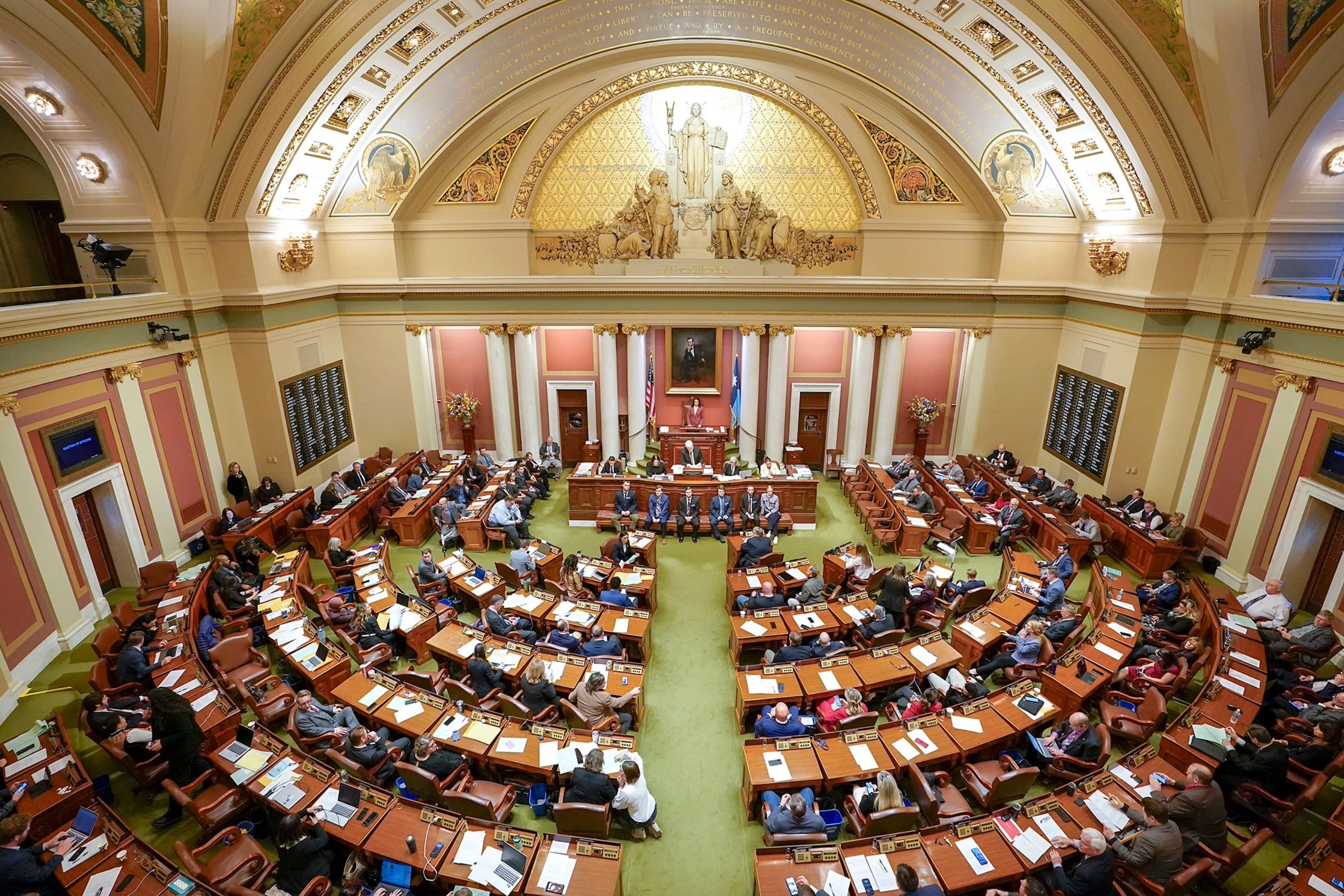
The Minnesota Legislature adjourned today after a weekend of passing the components of a previously agreed-upon budget deal. With adjournment, the state legislature is not expected to resume until January of 2027, after the upcoming 2026 elections.
For the past two years, the Minnesota Legislature has been more closely-divided than ever before. During the 2025 and 2026 legislative sessions, the Minnesota Senate had a one-vote DFL majority, and the Minnesota House of Representatives was tied 67-67.
The closely-divided makeup of the legislature meant lawmakers needed bipartisan agreement to write the state budget and pass any policy changes during the last two years.
In 2025, the 94th Minnesota Legislature enacted a two-year, $66 billion state budget that funds state government through June of 2027. When the 2026 legislative session began in February, lawmakers came prepared to work on many topics including anti-fraud bills and gun control.
While this year’s session was often filled with heated, partisan displays, lawmakers were able to pass several major provisions that were championed by both Democrats and Republicans.
On Sunday night, the last major bills of the 2026 legislative session were passed by the House and Senate. Gov. Tim Walz is expected to sign those bills into law. Today, both chambers officially adjourned after retiring members give their farewell speeches.
What passed this year in the Minnesota Legislature:
- Creation of an independent Office of the Inspector General to investigate fraud in Minnesota state government agencies and programs. This was the top priority for House Republicans and was authored by a bipartisan working group.
- $125 million in property tax relief that will be available via the property tax refund process. Minnesotans who get a property tax refund will see their homestead credit increased by 14.88% on taxes payable in 2026.
- $250 million in one-time vehicle tab fee reductions. Vehicle tab fees were raised by the DFL trifecta during the 93rd Minnesota Legislature. This reduction will revert vehicle tab fees to their 2022 rate for one year starting at the beginning of 2027.
- Up to $705 million to support Hennepin County Medical Center (HCMC) over several years. Many have warned that the Level-1 trauma hospital has been on the brink of financial collapse. More funding was appropriated for other distressed hospitals.
- Funding to upgrade IT systems used by local governments throughout Minnesota that administer various human services programs.
- School safety legislation that includes a requirement for schools to use anonymous threat reporting systems. Funding for school-linked mental health services was also passed.
- Increased security for Minnesota courthouses and the Minnesota State Capitol Complex. Additionally, lawmakers will now be able to obtain special protection if they receive credible threats of violence.
- Limitations on social media accounts for children. Social media companies will need to check if users are below 16. If so, those users will need to get parental consent and their accounts will not have addictive features such as infinite scroll.
- More staff at the Minnesota attorney general’s Medicaid fraud investigation unit. Minnesota state agencies were also given broader authority to suspend payments to Medicaid service providers who are suspected of fraud.
- $1.2 billion bonding bill for infrastructure projects such as bridges, roads, and wastewater treatment facilities throughout Minnesota.
What did not pass this year:
- A slate of gun control proposals that included a ban on federally-licensed firearms dealers selling firearms such as the AR-15. That omnibus bill was a top DFL priority this session and passed the Senate. The full House never voted on it.
- An omnibus bill that attempted to regulate federal immigration agents. That bill was also a top priority for Democrats and compiled various proposals pushed this year in response to the federal government’s recent immigration enforcement efforts in Minnesota.
- Legislation that would require dedicated pornography websites to verify a person’s age before they can use the website.
- A constitutional amendment to ask voters if term limits should be applied to the office of Minnesota governor and Minnesota lieutenant governor.
- A constitutional amendment to ask voters to place a so-called Equal Rights Amendment in the Minnesota Constitution. That amendment would enshrine abortion and transgenderism in the Minnesota Constitution.
- Legislation to enroll Minnesota in a federal program that would allow taxpayers to receive a tax credit for donating to private or public schools. (Note: The governor could unilaterally enroll Minnesota in the program without legislation).
At a press conference Monday morning, House Republicans made the case that Minnesotans are better off when Republicans are a part of the decision-making process in St. Paul.
In his comments, House GOP Floor Leader Harry Niska hearkened back to when the DFL had full control of Minnesota state government in 2023-24. He said the DFL trifecta at that time grew government by 40%, increased taxes by $10 billion, and spent a $18 billion surplus.
Drawing a contrast, Niska said Republicans have blocked new taxes on families, helped enact the largest spending reduction in state history, protected aid for nonpublic students, brought tax and fee relief, and enacted anti-fraud measures in the last two years.
“As we go into the 2026 election, Minnesotans are going to have a big choice in front of them,” Niska said. “Do they want continued, more expensive, less accountable government, or do they want Republicans to have a voice in Minnesota state government fighting for lowering the cost of government?”
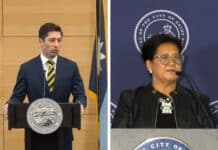
At his own Monday morning press conference, House DFL Leader Zack Stephenson championed the funding for HCMC, saying, “we saved HCMC.” He also touted the anti-fraud measures, IT upgrades, property tax relief, and one-time vehicle tab fee cuts.
“We just had an incredibly productive session at a time when, I think walking in, most people were not optimistic about that,” Stephenson said.
However, Stephenson made clear that his party’s gun control proposals and immigration bills would be a part of the upcoming fall campaign.
“House DFLers will take that message on the campaign trail this summer and fall. We will win a majority, and we will pass those bills into law in 2027,” he said. “We will never stop doing the work of the people of Minnesota, and we’re absolutely committed to that.”
Luke Sprinkel
Luke Sprinkel previously worked as a Legislative Assistant at the Minnesota House of Representatives. He grew up as a Missionary Kid (MK) living in England, Thailand, Tanzania, and the Middle East. Luke graduated from Regent University in 2018.