

The future is on the ballot in Minnesota.
After months of enduring candidates and campaign commercials, Minnesotans will put the 2026 elections to bed on Nov. 3. This year, everything from the Minnesota governorship, to congressional seats, to the state legislature, and local offices are on the ballot.
Much of the focus this year will be on whether Republicans can win a statewide office for the first time in 20 years. Additionally, the fight over the 201 seats in the Minnesota Legislature will likely be the most important factor in deciding the future of the state.
On all these fronts, Alpha News has got you covered with important information about the candidates, voting, and what is at stake in Minnesota. Here’s what you need to know as the 2026 elections come to an end.
The race for governor of Minnesota
DFL Gov. Tim Walz, who initially was seeking a third term, announced earlier this year that he would forgo his reelection bid. That decision came as he faced national scrutiny for the the widespread welfare fraud that has occurred in Minnesota state programs.
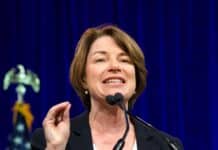
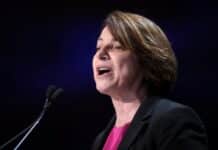
Now, the race to succeed Walz pits DFL U.S. Sen. Amy Klobuchar against Republican Lisa Demuth, the speaker of the Minnesota House of Representatives. Demuth is seeking to be the first Republican to win the governorship since Tim Pawlenty won reelection in 2006.
The race between Klobuchar and Demuth has been heated, with Demuth saying Klobuchar would be a continuation of Walz’s failed policies. Meanwhile, Klobuchar has pivoted to the right, saying she will audit state government and oppose new taxes.
So far, polling has shown Klobuchar leading Demuth in the race. In addition to Klobuchar and Demuth, Green Party candidate Steve Green is also running for governor.
- Demuth, Klobuchar square off in first gubernatorial debate as campaign enters final days
- Republican Lisa Demuth unveils updated plan to combat fraud as governor
- Demuth unveils ‘affordability agenda’ to cap tab fees at $99, lower income taxes
- Green Party governor candidate wants to abolish ICE, slams Klobuchar over Gaza
U.S. Senate
The race for U.S. Senate in Minnesota has become one of the most-watched political races in the country, with DFL Lt. Gov. Peggy Flanagan and Republican Michele Tafoya seeking to succeed DFL Sen. Tina Smith who announced she would not seek reelection this year.
Republicans have not won a U.S. Senate seat in Minnesota since Norm Coleman defeated former Vice President Walter Mondale in 2002.
Flanagan, who has served alongside Walz for the last eight years, is running on a far-left platform supporting universal childcare, Medicare for All, a national paid family and medical leave law, and “ripping ICE apart.”
Tafoya, a former sideline reporter on NBC’s Sunday Night Football, has run one of the strongest Senate campaigns Minnesota has seen in recent years and has hammered Flanagan, tying her to the fraud that has occurred under the Walz administration.
Meanwhile, Flanagan has tied Tafoya to President Trump, the Iran War, and high fuel prices.
Polling has shown the race between Tafoya and Flanagan is extremely close. Libertarian candidate Rebecca Whiting and independent candidate Marisa Simonetti are also running for the open U.S. Senate seat.
- ‘Sell it to someone else, Peggy’: Tafoya presses Flanagan on fraud as candidates clash at Senate debate
- Michele Tafoya outraises Peggy Flanagan again as toss-up Senate race hits final stretch
- EXCLUSIVE: GOP Senate candidate Michele Tafoya calls for Iran War to end ‘quickly and strategically’
- Senate race in Minnesota officially a ‘toss up’ as most recent poll shows a dead heat
Attorney general, secretary of state, and state auditor
In the race for Minnesota attorney general, Republican Ron Schutz is challenging two-term incumbent Keith Ellison. Much of that race has been dominated by discussions of fraud, with Ellison saying he has prosecuted fraudsters and Schutz saying Ellison has not done enough.
Ellison’s prior two elections for attorney general have been quite close and polling in this race also shows a close contest.
- Schutz slams Ellison’s record on fraud, lays out plan for attorney general’s office
- Court files reveal disturbing details of child sex offender pardoned by Walz, Ellison before deportation
The race for Minnesota secretary of state pits three-term incumbent Democrat Steve Simon against Republican Tad Jude, a former judge and state lawmaker. The race between the two has been relatively quiet compared to other statewide contests, but polling favors Simon.
- Tad Jude unveils plan to restore election security, transparency & accountability
- Congress grills Secretary of State Steve Simon over controversial Minnesota voter vouching law
In the race for state auditor, former Republican state Sen. Scott Jensen faces DFLer Zack Filipovich, an accountant and former Duluth City Council member. Jensen, a medical doctor, has significant name-ID due to his 2022 campaign for governor of Minnesota.
- Appeals court revives Scott Jensen’s free speech case against Minnesota medical board
- Republican attorney general, state auditor candidates lead DFL opponents in cash on hand
The Minnesota Legislature
The race to control the Minnesota Legislature is perhaps the most important contest on the ballot this year. Democrats currently have a one-seat majority in the Minnesota Senate, and the Minnesota House of Representatives is evenly split with 67 Republicans and 67 DFLers.
This year, all 67 state senators are on the ballot for the first time since 2022 when the DFL won their current majority and proceeded to increase the state budget by 38%, eliminated all restrictions on abortion, and provided services to illegal aliens.
There is a small group of swing seats in the Senate that will decide which party wins the chamber. Three of those seats are held by DFLers but were won by President Donald Trump in the 2024 presidential election.
- Senate District 3 — Northeastern Minnesota: DFL state Sen. Grant Hauschild vs. Republican Andrea Zupancich
- Senate District 4 — Moorhead area: DFL state Sen. Rob Kupec vs. Republican Austin Peterson
- Senate District 14 — St. Cloud area: DFL state Sen. Aric Putnam vs. Republican state Rep. Bernie Perryman
- Senate District 32 — North metro: Democrat Chris Ford vs. Republican state Sen. Michael Kreun
- Senate District 35 — North metro: Democrat Angela Nelson vs. Republican state Sen. Jim Abeler
- Senate District 37 — West metro: Democrat Kristy Janigo vs. Republican Brady Hoag
- Senate District 41 — Southeast metro: DFL state Sen. Judy Seeberger vs. Republican state Rep. Tom Dippel
- Senate District 48 — Southwest metro: Democrat Dan Kessler vs. Republican state Sen. Julia Coleman
- Senate District 58 — Southern Minnesota: Democrat Mark Legvold vs. Republican state Sen. Bill Lieske
In the 2024 elections, Republicans ended DFL control of state government by winning a tie in the House. However, there are a host of swing seats that will decide whether the tie stays or if one party finally wins control of the House. Some of them include:
- House District 2A — Northern Minnesota: Democrat Reed Olson v. Republican state Rep. Bidal Duran
- House District 3B — Northeastern Minnesota: Democrat Aaron Schweiger vs. Republican state Rep. Natalie Zeleznikar
- House District 14B — St. Cloud area: Democrat Zachary Dorholt v. Republican Sue Ek
- House District 32B — North metro: DFL state Rep. Matt Norris v. Republican Leslie Larson
- House District 34A — Northwest metro: Democrat Jason Heaser v. Republican state Rep. Danny Nadeau
- House District 35A — North metro: DFL state Rep. Zack Stephenson v. Republican Josh Jungling
- House District 36A — North metro: Democrat Jim DeMay vs. Republican Sebastian Stoss
- House District 41A — East metro: Democrat Cole Birkeland v. Republican state Rep. Wayne Johnson
- House District 41B — Southeast metro: Democrat Jen Fox v. Republican William Beck
- House District 48B — Southwest metro: DFL state Rep. Lucy Rehm v. Republican Caleb Steffenhagen
- House District 54A — Southwest metro: DFL state Rep. Brad Tabke v. Republican Aaron Paul
Congressional Districts 1 and 2
While most of Minnesota’s seats in the U.S. House of Representatives are either solidly red or solidly blue, two seats are considered competitive this year.
The first is Minnesota’s Second Congressional District which includes much of the south metro area and stretches into parts of rural Minnesota. That seat is currently held by DFL Rep. Angie Craig who ran for Senate this year rather than seeking reelection.
State Sen. Eric Pratt is the Republican nominee for the seat while former state Sen. Matt Little is the DFL nominee. The Cook Partisan Voting Index rates the Second District as D+3 and the race between Pratt and Little is currently considered “Likely D.”
- Republican Eric Pratt to face far-left DFLer Matt Little in race for toss-up congressional seat
- EXCLUSIVE: New poll shows Republican Eric Pratt in close race with DFL congressional candidates
In the race for Minnesota’s First Congressional District, incumbent Republican Congressman Brad Finstad is seeking a third term. He won his previous reelection in 2024 by roughly 17 points. Finstad faces Rochester math teacher Jake Johnson in this year’s election.
Minnesota’s First Congressional District encompasses much of southern Minnesota and includes the cities of Rochester, Mankato, and Winona. The Cook Partisan Voting Index rates the First District as R+6 and this year’s race is currently considered “Lean R.”
- Interview from a combine: Rep. Finstad on fraud, Minnesotans losing hope for Minneapolis, and more
- Finstad sounds alarm on ‘troubling decline’ in Minnesota’s educational performance
Election Day is Nov. 3, but early voting is ongoing through Nov. 2.
Minnesotans will go to the polls to vote on these races and other contests for county offices, city offices, and school board on Nov. 3. However, eligible voters have the option to vote early in person through Nov. 2. More information about early voting is available here.
You can find your polling place here. You can view your sample ballot here. You can view instructions for registering to vote here. For further information about voting, the upcoming elections, and more, please visit the Minnesota Secretary of State’s website.
This page will continue to be updated with new information from now until Election Day, including additional stories on some of the swing seats that will determine who controls the legislature.

Luke Sprinkel
Luke Sprinkel previously worked as a Legislative Assistant at the Minnesota House of Representatives. He grew up as a Missionary Kid (MK) living in England, Thailand, Tanzania, and the Middle East. Luke graduated from Regent University in 2018.